
← Blog · Aeration · 5 min read
Core Aeration + Overseeding: The Combo That Thickens Any Indiana Lawn
2026-04-15 · by Tom · The Lawn Guy
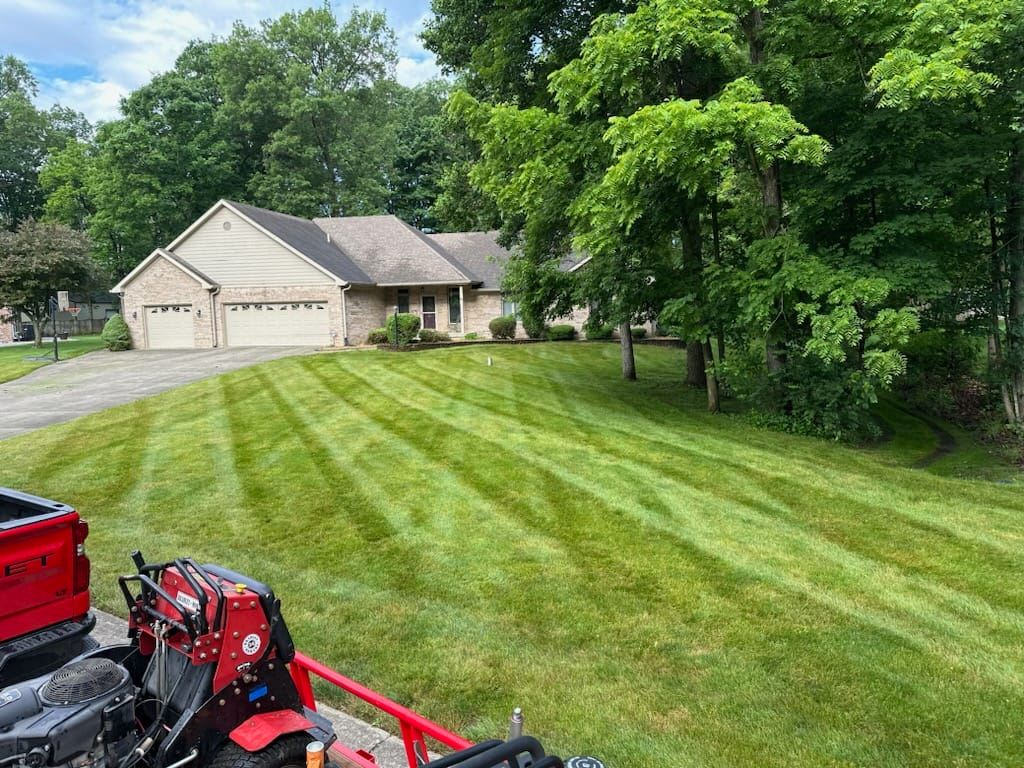
There’s a reason good lawn services will almost always suggest aerating and overseeding together instead of separately: the two multiply each other. Doing them on the same day isn’t an upsell — it’s just how the math works.
What each one does on its own
Core aeration pulls small plugs of soil out of your lawn, creating channels for air, water, and nutrients to reach the root zone. It fixes soil compaction, which is the hidden cause behind a lot of “just won’t thicken up no matter what I do” Indiana lawns.
Overseeding spreads new grass seed over existing turf, filling in thin areas, patching bare spots, and introducing fresh grass that’s more resistant to disease and drought than older stands.
Done separately, each one helps. Done together, each one helps the other.
Why they work together
When you aerate, you leave thousands of small holes across the lawn. Those holes:
- Hold moisture around the seeds, protecting them from drying out
- Give seeds shade from direct sun while they germinate
- Create seed-to-soil contact — the single biggest factor in germination rates
- Protect seeds from birds and wind
If you broadcast seed onto compacted, hard-packed lawn, most of it never reaches soil. It sits on top, dries out, gets eaten, or washes away in the first heavy rain.
If you broadcast seed onto a freshly-aerated lawn, a huge percentage of it falls directly into the soil plugs and channels. Germination rates jump, and the new seedlings come up in the best possible environment for establishment.
The timing window
In Indiana, fall is the ideal window — specifically late August through mid-October.
Why fall:
- Cool-season grass seed (bluegrass, fescue, rye) germinates in soil temperatures between 50–65°F
- Days are warm enough for growth, nights cool enough for moisture
- Fall rain is typically consistent
- The seedlings get 6–8 weeks of growth before winter
- Fewer weeds compete with new grass than in spring
Don’t try this in summer. Hot dry soil kills new seedlings before they establish.
Spring is a second-choice window (April–May). It works, but you’ll fight crabgrass and summer heat more than you will in fall.
What seed to use
For most Central Indiana yards, a blend designed for your sun exposure:
- Full sun: Kentucky bluegrass + perennial ryegrass blend
- Mostly sun: Tall fescue + bluegrass mix
- Partial shade: Tall fescue or fine fescue mix
- Heavy shade: Fine fescue only (grass struggles in full shade regardless of variety)
Most Indiana garden centers carry mixes labeled for the state. Avoid “annual ryegrass” unless you’re explicitly doing quick green-up — it dies off in winter.
How much seed to overseed
About 4–6 pounds per 1,000 square feet is typical for overseeding established lawns. New lawns from bare soil need 2–3 times that amount.
A standard suburban front yard (5,000 square feet) needs about 20–25 pounds of seed for a proper overseed. Which, at typical bag prices, runs $60–$120.
What to do after
The first 2–3 weeks after aeration and overseeding are the make-or-break window:
- Keep it moist. The top inch of soil should never dry out. Short, frequent waterings (10–15 minutes twice a day) beat long heavy ones until the grass is up.
- Don’t mow for 10–14 days after seeding, or until the new grass reaches 3 inches.
- Don’t apply pre-emergent weed control for at least 6 weeks. It kills grass seed too.
- Skip the fertilizer push unless you’re using a starter fertilizer designed for new seed.
- Let the soil plugs dissolve on their own. They’ll break down in 1–2 weeks.
When to skip overseeding and just aerate
A few cases where just aerating (no overseeding) makes sense:
- Your lawn is already thick and healthy; you just want to fight compaction
- You’re applying a pre-emergent this fall for next year’s crabgrass
- You plan to do a full renovation (kill-and-reseed) next spring
- You already overseeded earlier this year
Otherwise, if you’re paying to have a core aerator on your lawn, overseeding at the same visit is almost always worth the extra spend.
The bottom line
Aerate + overseed in fall. It’s the single highest-leverage thing most Indiana homeowners can do for their lawn. The aeration fixes the soil. The overseeding fills in the thin spots. The combination is what gets you the kind of thick, uniform turf that looks maintained instead of just cut.
The Lawn Guy schedules fall aeration and overseeding across New Palestine, Fortville, Greenfield, and Hancock County each September and October. Call Tom at (317) 517-0728 to get on the schedule early — the window fills up.
Need help with your yard?
Tom handles mulching, mowing, planting, cleanup, and aeration across New Palestine, Fortville, Greenfield, and Hancock County. Call for an honest quote.
Call (317) 517-0728 Send a Message