← Blog · Mulching · 5 min read
Best Mulch Colors for Indiana Homes (and When Each One Works)
2026-04-15 · by Tom · The Lawn Guy
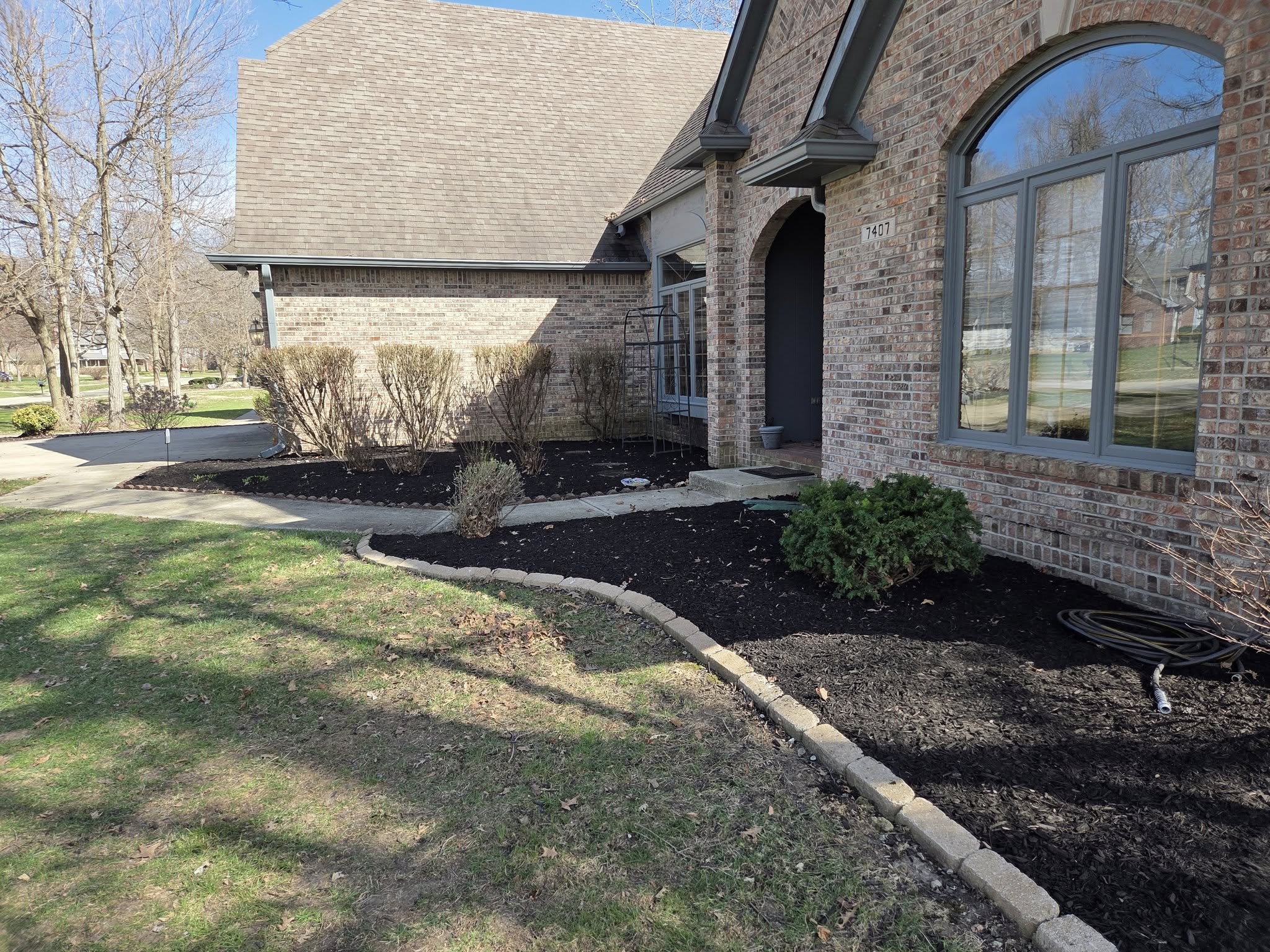
If you’ve ever stood in front of a wall of mulch bags at the garden center trying to figure out whether black or brown looks better against your brick, you’re not alone. It’s genuinely one of the most common questions homeowners have in spring.
There’s no universal “best.” But there ARE color-by-color tradeoffs that make certain choices work better for certain homes.
The main options
Five common types you’ll see at any Indiana supplier:
- Natural hardwood (undyed, ages to silver-gray)
- Dyed black
- Dyed brown (light to dark)
- Dyed red
- Cedar (naturally reddish-brown)
Plus a few specialty options: cocoa hull mulch, cypress, pine bark nuggets, rubber mulch (not recommended for most landscapes).
Black mulch
Works best with:
- Light-gray or tan brick houses
- Modern homes with bold architectural lines
- Gardens with lots of green foliage (black makes the green pop)
- Homes with light-colored siding (white, beige, pale blue)
Avoid on:
- Dark-colored homes (black mulch against dark brick disappears visually)
- Yards where the goal is a “natural” look
Maintenance note: black fades the fastest in full sun. You’ll see noticeable lightening by mid-summer. Expect to refresh annually if you want the deep black look year-round.
Brown mulch (medium to dark)
Works best with:
- Red brick (the most common Indiana siding — brown is usually the safe choice here)
- Homes with earth-tone siding
- Traditional or craftsman-style architecture
- Homeowners who want a “natural but tidy” look
Avoid on:
- Nothing really — brown is the universal default for a reason
Maintenance note: fades slower than black or red. Most dark brown mulches hold color well through August.
Red mulch
Works best with:
- Homes with gray or taupe siding (red provides contrast)
- White or light-colored houses where you want visual pop
- Southwestern or Mediterranean-style landscaping
Avoid on:
- Red brick homes (red mulch + red brick = muddy, blends together badly)
- Gardens with lots of flowering plants (the red mulch fights flower colors)
Maintenance note: red fades toward dusty-pink by mid-summer. Most people either love or hate red mulch; there’s not much middle ground.
Natural (undyed) hardwood
Works best with:
- Owners who prefer a more organic, less “landscaped” look
- Native plant gardens
- Wooded lot settings
- Anyone who doesn’t want to refresh annually
Avoid on:
- Homes where crisp curb appeal is the goal — natural mulch ages quickly to gray
Maintenance note: natural mulch turns silver-gray within a few weeks of installation. This is normal. It still suppresses weeds and retains moisture just as well — it just doesn’t look “freshly mulched.”
Cedar
Works best with:
- Homes near wooded areas (natural look, pest-repellent)
- Areas where ant or pest control is a concern
- Gardens with delicate plants (cedar is gentle)
Avoid on:
- Areas where you don’t want the reddish tint
- Large beds on a budget (cedar costs more per yard than hardwood)
Maintenance note: cedar has natural oils that resist decay and repel some insects. Holds its color moderately well and has a noticeable cedar scent when fresh.
A word on cocoa mulch
You’ll see cocoa hull mulch occasionally. It smells incredible (like chocolate). Two warnings:
- It’s toxic to dogs — theobromine, same as chocolate. Don’t use in yards where dogs roam.
- It molds quickly in Indiana’s humid summers. Pretty for about a month, then goes white-fuzzy.
Skip it unless you have a dog-free, dry microclimate.
Matching mulch to common Indiana home styles
- Red brick ranch (very common in Hancock County): dark brown or natural hardwood
- Tan/cream brick colonial: medium brown or black
- White vinyl-sided home: black or dark brown for contrast
- Gray/taupe modern home: black (high contrast) or red (warm pop)
- Craftsman/cottage: natural, cedar, or medium brown
Dyed vs undyed: is the dye safe?
Most dyes used in commercial mulch are iron oxide (red/brown) or carbon (black). These are the same pigments used in face makeup and food coloring — they’re inert and don’t leach harmful chemicals into soil.
The concern with some cheaper dyed mulches is the wood itself. Low-quality mulch can be made from chipped construction debris, which sometimes contains treated wood (CCA, arsenic-based). Buy from a reputable supplier that uses clean hardwood or bark, and dye is a non-issue.
Depth matters more than color
Whatever color you pick, depth is what actually controls how well mulch performs. 3 inches is the sweet spot. Less than 2 inches and weed-suppression drops fast. More than 4 inches and you start to suffocate plant roots.
See How Much Mulch Do I Need? for the volume math.
One thing professionals won’t tell you
Color choice is 80% personal preference and 20% curb appeal rules. If you love red mulch on a red brick house because your grandmother had it, that’s a valid reason. Yards are personal. The “rules” above are starting points, not laws.
The bottom line
If you’re on the fence, dark brown is the universal safe choice for most Indiana homes. It works with almost any siding, ages gracefully, and doesn’t compete with flowers. Black makes a statement on lighter homes. Red is polarizing but striking. Natural is for the anti-manicured crowd.
Whatever you pick, install it 3 inches deep and keep it off the trunks of your trees.
Need mulch supplied and installed? The Lawn Guy offers multiple color options with bulk install across New Palestine, Fortville, Greenfield, and Hancock County. Call Tom at (317) 517-0728 for a quote.
Need help with your yard?
Tom handles mulching, mowing, planting, cleanup, and aeration across New Palestine, Fortville, Greenfield, and Hancock County. Call for an honest quote.
Call (317) 517-0728 Send a Message