
← Blog · Cleanup · 5 min read
Your Hancock County Spring Cleanup Checklist
2026-04-15 · by Tom · The Lawn Guy
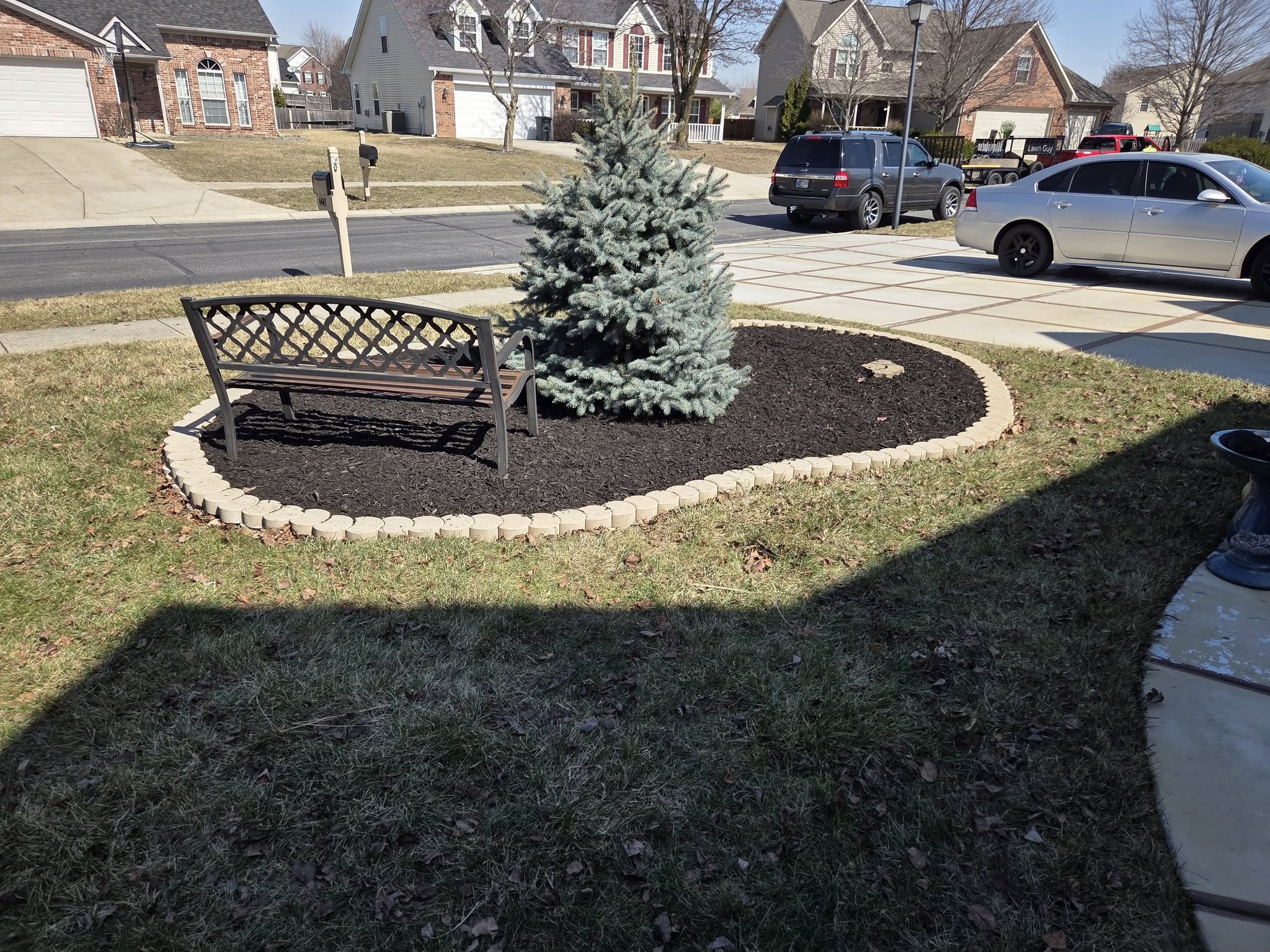
Spring in Hancock County shows up in fits and starts. One 70-degree weekend, two weeks of cold rain, a surprise late frost, and then suddenly everything’s green. The timing on spring yard work matters because doing things too early (or in the wrong order) makes more work, not less.
Here’s a practical checklist in the order it should actually happen.
Step 1: Wait for the right window
Don’t start spring cleanup until:
- The last hard frost has passed — typically around April 15–20 in Central Indiana (Hancock County’s last-frost date)
- The ground is no longer soggy from snowmelt or spring rain — walking on wet lawn creates compaction that lasts all summer
- Your lawn has started greening up on its own
Starting too early tears up roots that haven’t broken dormancy yet and wastes effort on cleanup the rain will just re-mess-up.
Step 2: Walk the property and assess
Before touching a rake, do a 10-minute walk-through. Look for:
- Winter damage to trees and shrubs — broken branches, winter burn on evergreens, snow damage
- Dog tracks, plow damage, edge blowout along driveways and walks
- Vole or mouse damage — telltale 1-inch trails in the grass (more on this below)
- Bare patches from snow mold or salt
- Standing water or drainage issues exposed by recent rain
Make a list. Tackle the big stuff first; don’t get lost raking the front yard before you notice the downspout is disconnected.
Step 3: Pick up debris
Clear everything before you do any mechanical work:
- Fallen sticks and branches
- Leaves piled up against fences, in beds, and under shrubs (especially near the house)
- Trash and road debris blown in over winter
- Dead annuals still in pots or beds
- Matted-down leaves on the lawn itself
If you have leaves you “left” last fall, now is when they actually need to move. Matted wet leaves smother grass as it tries to green up. A light leaf layer (10–20% ground coverage) is fine. Heavy mats have to go.
Step 4: Cut back perennials and ornamental grasses
Once it’s consistently above freezing at night:
- Ornamental grasses — cut down to 4–6 inches. They’ll send up fresh green from the base.
- Perennials left standing for winter interest (coneflowers, black-eyed Susans, sedum) — cut the old stalks down to a few inches.
- Russian sage, butterfly bush, hydrangea (some types) — prune back per type. If unsure, prune lightly and wait to see where new growth appears.
- Dead roses, clematis, climbing vines — tidy and shape.
Don’t prune spring-flowering shrubs (forsythia, lilac, azalea) until AFTER they bloom. Pruning them now removes this year’s flowers.
Step 5: Edge the beds
Clean bed edges are the single most underrated upgrade to a yard. A sharp 2-inch vertical edge between mulch and lawn:
- Makes mowing easier
- Keeps mulch in place
- Makes everything else look maintained even if it isn’t
Use an edging tool or a sharp flat spade. Do this before you mulch — it’s awkward to edge through fresh mulch.
Step 6: Mulch refresh
If you had mulch last year, it’s probably down to about half its original depth. Add 1–2 inches to bring beds back to a total of 3 inches.
If you skipped mulching last year, do a full 3-inch install now. Weed-suppression value drops fast below 2 inches.
See How Much Mulch Do I Need? for the math.
Step 7: First mow (but be patient)
Don’t mow just because the weather is warm. Mow when the grass is actually growing — meaning you can see green blades pushing up past the dead winter layer.
First mow of the season:
- Cut slightly lower than usual (about 2.5 inches) to clear dead tissue and let sunlight reach the crown
- Sharpen the blade first. Dull blades tear grass, which is worse in cool spring conditions when grass heals slowly.
- Bag the clippings on the first mow only — lots of dead debris, better to remove
- Don’t scalp. Keep the 1/3 rule: never cut off more than 1/3 of the blade height at a time.
Step 8: Fertilizer (optional, timing-sensitive)
If you use a spring fertilizer, apply it AFTER the first mow, when the grass is actively growing. Applying too early wastes product — the lawn can’t use nutrients it doesn’t have roots to absorb yet.
Many Central Indiana homeowners skip spring fertilizer entirely and focus on fall feeding (which matters more for cool-season grass health). Either approach is defensible.
Step 9: Pre-emergent (timing matters)
If you’re applying a crabgrass pre-emergent, the window is usually when forsythia blooms and soil temps hit 55°F — typically mid- to late-April in Hancock County. Apply too late and you’re protecting grass from crabgrass that’s already germinated.
Important: don’t apply pre-emergent if you’re planning to overseed this spring. It kills grass seed too.
Step 10: Plan the summer
By the end of spring cleanup, you should know:
- What beds need new plants
- Whether any shrubs need replacement
- If you’re going to do a mid-summer mulch touch-up
- When you’ll schedule fall aeration
Spring is the right time to book the rest of the season before everyone else does.
Common spring cleanup mistakes
- Walking on wet lawn. Soil compacts under foot pressure when saturated. Wait for it to dry to a spongy-but-firm state.
- Raking too aggressively. A light dethatching rake is fine; scalping the lawn with a metal-tine rake rips out live roots.
- Power-washing everything. Concrete and siding yes, fences no. High pressure tears up wood.
- Starting mulch before edging. Edge first, then mulch. Otherwise you’re cutting through fresh mulch.
- Spring aeration on compacted clay. If you aerate this spring, overseed at the same time OR skip the overseed — don’t open the soil without a plan for what goes in the holes.
What to leave undone
Not every spring task has to happen in spring:
- Aeration — fall is better for Indiana cool-season lawns. If you can only afford one aeration, wait for September.
- Major planting — you can plant in spring, but fall is often easier for establishment in clay soil.
- Hardscape and drainage projects — wait for dry weather in early summer.
The bottom line
Spring cleanup in Hancock County is about timing as much as effort. Wait for the ground to dry. Do debris first, then pruning, then edging, then mulch, then the first mow. Don’t fight the weather — work with it.
Too much to tackle on a weekend? The Lawn Guy handles spring cleanups across New Palestine, Fortville, Greenfield, and McCordsville — debris, pruning, edging, mulch, first mow, all in one visit. Call Tom at (317) 517-0728 to get scheduled.
Need help with your yard?
Tom handles mulching, mowing, planting, cleanup, and aeration across New Palestine, Fortville, Greenfield, and Hancock County. Call for an honest quote.
Call (317) 517-0728 Send a Message