
← Blog · Aeration · 5 min read
Why Indiana Clay Soil Makes Aeration Non-Negotiable
2026-04-15 · by Tom · The Lawn Guy
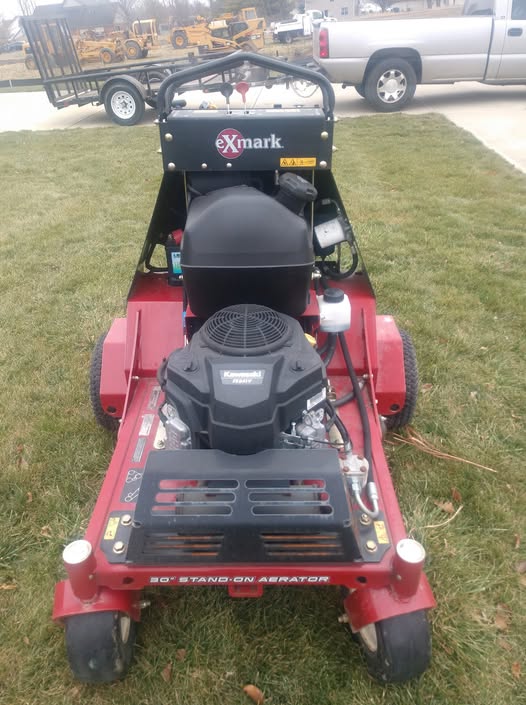
If you’ve ever tried to dig a hole in a Central Indiana yard in July and hit what felt like concrete, you already know the problem. Most of Hancock County — including New Palestine, Fortville, Greenfield, and McCordsville — sits on heavy clay soil. And that soil does something that homeowners in sandy or loamy regions never have to think about: it compacts, fast.
Compaction is the quiet killer of a lot of Indiana lawns. The grass doesn’t die all at once; it just gets a little thinner, a little browner, a little more vulnerable to weeds every year. Eventually the owner gives up and reseeds, and six months later the new grass looks just like the old grass.
The fix isn’t more fertilizer or more water. It’s aeration.
What’s actually happening below the surface
Clay particles are tiny and flat. When a yard is new, there’s still air and water moving between them. But every time you walk on it, mow over it, park a car on it, or even just let a heavy rain pack it down, those particles squeeze a little closer together. Over a few seasons you end up with a layer of soil that water can’t penetrate and roots can’t push through.
According to Purdue Extension research, soil compaction is greatest in the upper 1 to 1½ inches — exactly where your grass roots live. And it’s far worse on heavy clay than on sandy soils.
The result: your grass sits on a root zone that’s only about an inch deep. Anything beyond that is a wall.
Why core aeration (not spike aeration) is the answer
Core aeration pulls small plugs of soil out of the ground, creating channels that let air, water, and nutrients reach the root zone. It’s the single most effective thing you can do for compacted soil.
Spike aeration is not the same thing. Spikes just push soil out of the way, which on clay actually makes the problem worse — the pressure packs surrounding soil particles even tighter. If you’re on heavy clay and someone offers to “aerate” with a spike roller, pass.
A proper core aerator leaves little soil plugs scattered across your yard. They’ll dissolve back into the lawn over the next couple of weeks as rain hits them. Don’t rake them up.
How often clay soil needs it
The standard advice for most soil types is to aerate every 2–3 years. Indiana clay soil is the exception.
LawnStarter’s Indiana-specific guidance notes that “very heavy soils that contain a lot of clay particles tend to become compacted more quickly and may require aeration every fall.” Most Hancock County yards fall in this category — newer subdivisions especially, where the topsoil was stripped during construction and the remaining subsoil is almost pure clay.
A good general rule for Central Indiana:
- Newer construction (under 10 years): aerate annually
- Established yards on clay: aerate annually or every other year
- Yards with unusual traffic (kids, dogs, parking on grass): annual
If in doubt, the “screwdriver test” is simple: after a light rain, try pushing a screwdriver 4 inches into the soil. If it takes real force to get past the first inch or two, you’re compacted.
When to aerate in Indiana
Fall is best. Specifically August through October, when our cool-season grasses (fescue, Kentucky bluegrass, perennial ryegrass) are in their peak growing period and can recover quickly from the stress.
Spring (April–May) is the second-best window. It works — especially if you missed fall — but it gives crabgrass and weeds an opening since they also love freshly-opened soil.
Summer aeration is a bad idea in Indiana. The grass is heat-stressed and can’t recover fast enough.
Pair it with overseeding for the biggest payoff
The holes left behind by core aeration are ideal seed-to-soil contact. If you’re aerating in fall, overseeding at the same time essentially doubles the benefit — you get better roots for existing grass AND fresh new grass filling in thin areas.
This combination is the single most cost-effective thing you can do for a tired Indiana lawn. Most people see meaningful improvement in about 6 weeks.
The bottom line
Aeration isn’t a luxury service on Indiana clay. It’s the difference between a lawn that gradually declines every year and one that gets thicker every year. Skip a year if you must, but don’t skip two in a row — and if you’re on clay in a newer subdivision, plan on annual.
Need aeration done this fall? The Lawn Guy runs core aeration across New Palestine, Fortville, Greenfield, McCordsville, and the east side of Indianapolis. Call Tom at (317) 517-0728 to get on the schedule.
Need help with your yard?
Tom handles mulching, mowing, planting, cleanup, and aeration across New Palestine, Fortville, Greenfield, and Hancock County. Call for an honest quote.
Call (317) 517-0728 Send a Message