
← Blog · Aeration · 4 min read
When to Aerate Your Lawn in Indiana: Spring vs. Fall Explained
2026-04-15 · by Tom · The Lawn Guy
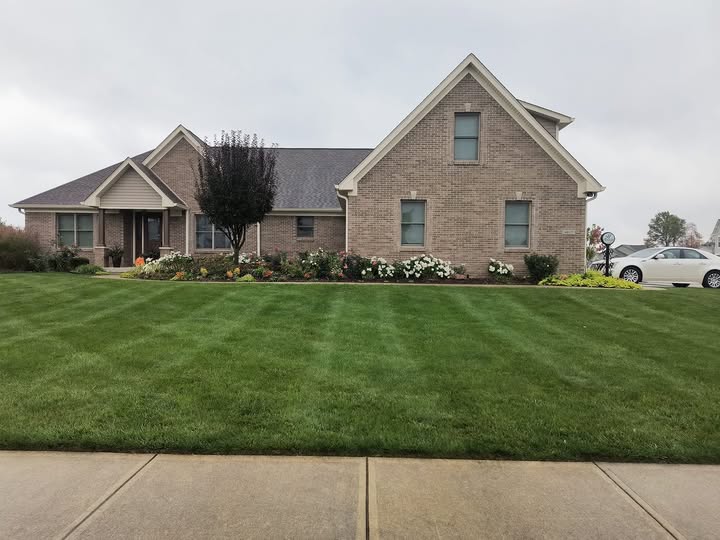
There are two windows to aerate an Indiana lawn each year — a good one and a better one. If you only aerate once, pick the better one.
The short answer
- Best: Fall, roughly August through October
- Second-best: Spring, roughly April through May
- Skip: June, July, and mid-winter
Why fall is better
Indiana’s lawns are almost entirely cool-season grasses: Kentucky bluegrass, tall fescue, fine fescue, and perennial ryegrass. These grasses do most of their root growth in fall, when days are warm but nights are cool and the soil stays moist.
If you open up the root zone in September, the grass responds by pushing new roots into the channels. Those deeper, stronger roots are what carry your lawn through next summer’s drought and heat.
Fall aeration also pairs perfectly with overseeding — more on that below.
When spring aeration makes sense
Spring works if:
- You missed fall
- Your lawn is visibly thinning and you don’t want to wait another six months
- You’re seeding a new area and want to give it every possible advantage
The downside of spring aeration is that it opens up soil at exactly the same time crabgrass and other annual weeds are germinating. If you aerate in spring, be prepared to deal with a little more weed pressure, or apply a pre-emergent weed control a few weeks later (timing matters — don’t apply pre-emergent right after aerating if you’re also overseeding, because it kills grass seed too).
Why summer aeration is a bad idea
Summer is stressful for cool-season grasses. They’re not growing actively, they’re just trying to survive the heat. Poking holes in the lawn in July adds stress without a fast recovery window. Save it for when the grass can respond.
Why deep winter doesn’t work either
The ground is frozen, the grass is dormant, and even if you could get a core aerator into the soil, nothing would fill the holes back in. Aerate when the grass is actively growing.
What the Purdue Extension says
Purdue’s turfgrass science guidance matches this: aerate when the grass is actively growing and has the resources to recover. For Central Indiana cool-season lawns, that’s the two shoulder seasons — fall and spring — with fall taking the crown.
Combine aeration with overseeding for the biggest payoff
The holes left by a core aerator are perfect seed-to-soil contact for overseeding. If you aerate in fall and overseed the same day:
- Seed falls into the holes
- Holes hold moisture around the seed
- Seedlings establish in the loosened soil
- By winter, you have thicker grass
This combo (core aerate + overseed) is what most Indiana lawn pros consider the single most cost-effective thing you can do for a tired yard. It’s not a magic fix, but it’s the thing with the best return for the dollar.
Quick checklist before you aerate
- Mow the lawn 1–2 days before (shorter than usual, not scalped)
- Soil should be moist but not soaked — water lightly the day before if it’s dry
- Flag your sprinkler heads and buried utility lines (call 811 if you’re not sure)
- Plan for the plugs to sit on your lawn for 1–2 weeks before dissolving
The bottom line
Fall. August through October. That’s when to aerate an Indiana lawn. Spring is fine as a backup. Summer is counterproductive.
If you’re on heavy clay (most of Central Indiana is), you should be aerating every year, not every other year. See Why Indiana Clay Soil Makes Aeration Non-Negotiable for more on that.
Want aeration done right? The Lawn Guy schedules core aeration across New Palestine, Fortville, Greenfield, and Hancock County each fall. Call Tom at (317) 517-0728 to get on the list before the window closes.
Need help with your yard?
Tom handles mulching, mowing, planting, cleanup, and aeration across New Palestine, Fortville, Greenfield, and Hancock County. Call for an honest quote.
Call (317) 517-0728 Send a Message